
How to Choose a Christmas Tree Topper That Actually Fits
The topper is the last thing on the tree and the first thing everyone sees. Five minutes of measuring saves you the leaning star, the lost-in-the-branches angel, and the December return trip.
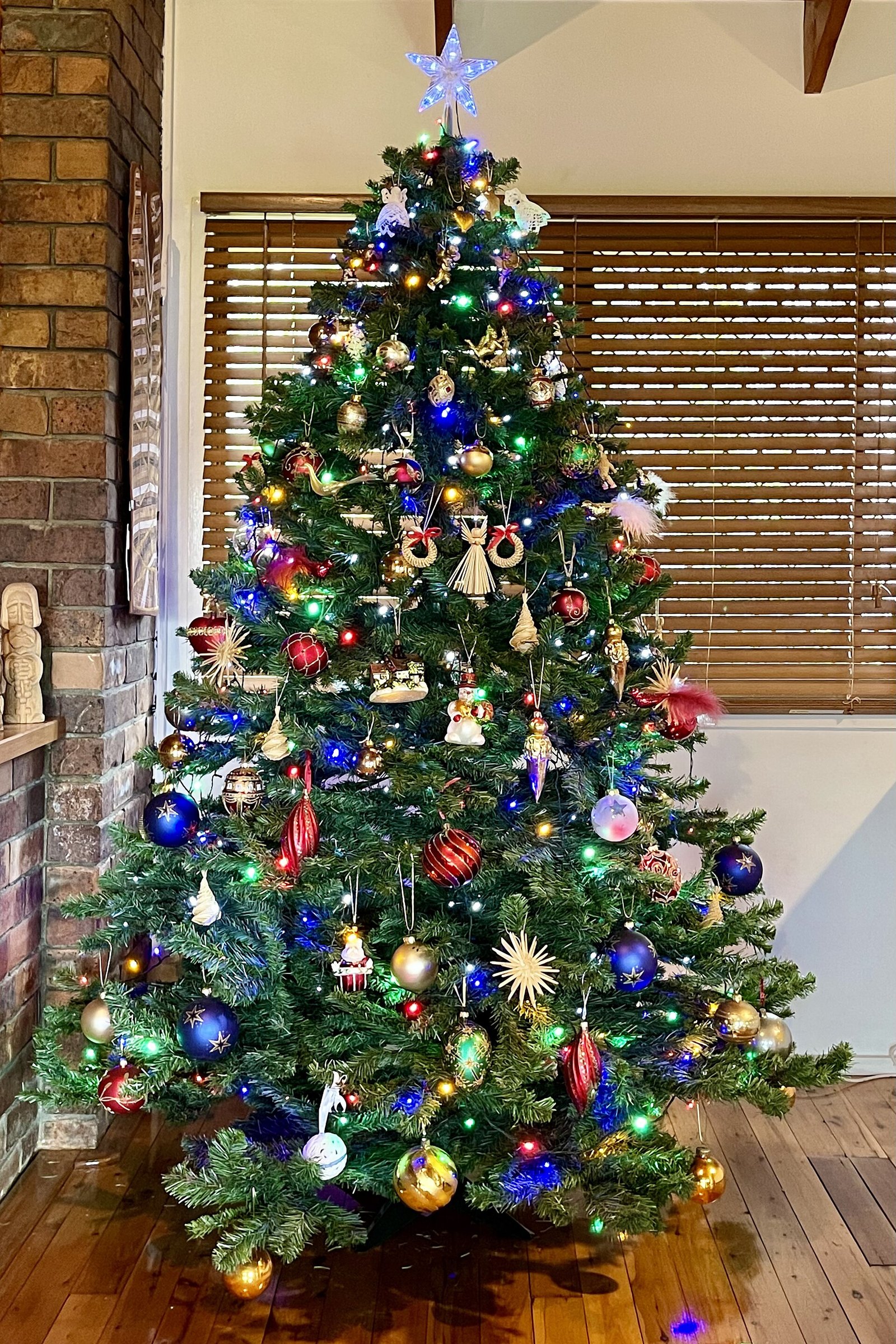
Fast answer: Pick a topper that is roughly one-tenth as tall as your tree — about 6 to 8 inches for a 6-foot tree, 8 to 10 inches for a 7-footer — light enough that the top branch holds it straight, in a style that matches the tree below it, and leave at least 6 inches between the top of the topper and your ceiling. Get those four things right and the topper looks like it grew there.
The tree topper is the last thing that goes on and the first thing everybody sees. It is also, in my experience, the purchase people rush. They fall for a gorgeous star in the store, get it home, and discover it is either lost on a big tree, dragging a slim tree sideways, or tall enough to kiss the ceiling. Choosing well takes about five minutes of measuring and a little honesty about your tree. Here is how to do it.
Start With Size: The One-Tenth Rule
Decorators use a simple proportion: the topper should span roughly one-tenth of the tree's total height. It is not a law, but it is a remarkably good starting point, and the standard size bands back it up. Small toppers run about 6 to 9 inches, large toppers 11 to 16 inches, and oversized toppers — the dramatic ones for tall, full trees — are 17 inches and up.
| Tree height | Topper height to look for |
|---|---|
| 4 to 5 feet (tabletop and apartment trees) | 5 to 7 inches |
| 6 feet | 6 to 8 inches |
| 7 to 7.5 feet | 8 to 12 inches |
| 9 feet and taller | 12 to 17+ inches |
Width matters as much as height. A wide, starburst-style topper suits a full tree with wide lower branches; a slim, elongated shape — a finial, a slender angel, a simple spire — flatters a pencil tree. And measure your ceiling clearance before you fall in love: tree height plus topper height plus at least 6 inches of breathing room has to fit under the ceiling, or the whole arrangement feels squeezed.
Weight: The Thing Nobody Checks in the Store
Here is the quiet deal-breaker. The top leader branch of a tree — especially a real tree — is not that strong. A heavy metal or glass topper on a weak leader bends, tilts, and eventually takes a dive into the ornaments below, usually at the worst possible moment.
If your tree is real, or slim, or you just do not want the worry, choose light materials: felt, fabric, paper stars, ribbon bows, and lightweight resin all sit happily on almost any tree. Save the substantial metal and glass pieces for sturdy artificial trees with strong center poles, and reinforce when you need to — a little floral wire, a zip tie, or a slim dowel wired alongside the leader gives a heavy topper the spine it needs. Our Decor, Trees and Lights section lists toppers alongside the trees they suit, which makes matching them much easier.
Match the Style to the Tree You Actually Have
The star and the angel are the two most popular toppers in the world, and for good reason — the star for the Star of Bethlehem, the angel for the heavenly messengers, and both read instantly as "Christmas" from across the room. But they are the beginning of the list, not the whole list:
- Traditional trees (red, gold, family ornaments): a gold star or a classic angel belongs here.
- Modern and minimalist trees: a geometric star, a sleek metallic finish, or one oversized simple bow in a neutral — gold, silver, white. Clean lines, one color.
- Rustic and natural trees: wood, burlap, woven straw, or a small cluster of pinecones and berries wired together.
- Whimsical family trees: this is where the fun lives — a Santa hat, a favorite character, the handmade topper a kid made that has somehow become non-negotiable. Tradition beats taste here, every time, and rightly.
Color works the same way as ornaments: harmonize, do not match exactly. If the tree is predominantly red and gold, a gold topper deepens the scheme; a silver or white topper against dark green branches gives you contrast and sparkle. For more on building the whole look in layers, our guide to Christmas tree decorating ideas walks through lights, garland, and ornaments in the order professionals use.
Lighted or Unlighted?
A lighted topper solves a real problem: the top of the tree is the farthest point from the outlets and often the dimmest part of the display. A glowing star crowns the tree with light exactly where you want the eye to land. The trade-offs are practical ones — some run on batteries (check whether they are included, and keep spares), some plug in and leave you a cord to hide down the back of the tree, and on a pre-lit tree you will want to check that the connections and color temperature play nicely with the lights you already have. If your tree is one of the finest artificial trees with dense built-in lighting, an unlighted topper in a beautiful material is often the more elegant finish.
How to Put It On So It Stays On
Most toppers attach one of three ways: a cone or hollow base that slides over the top branch, a spiral base that twists around it, or a clip. Whichever yours uses, the ritual is the same. Use a stable step ladder, have someone steady the tree, seat the topper on the strongest, straightest part of the leader, then fluff the top branches around its base to cradle it. Step back — actually step all the way back, to where guests will see it — and check it from two angles, because a topper that looks straight from the ladder leans from the doorway surprisingly often. Fragile glass and crystal toppers deserve one extra thought: keep them out of reach of small children and climbers of the feline kind, and store the topper in its own padding in January, not loose in the ornament bin.
One last suggestion, from our house to yours: put the topper on as a moment, not a chore. In a lot of families it is the official end of decorating — tree trimmed, lights on (our guide to how many lights your tree needs will get that part right), topper placed, and then the first Christmas movie of the season goes on. That is not a bad tradition to start this year.
Shop This Article
As an Amazon Associate we earn from qualifying purchases — thank you for supporting the site.
Lighted Star Christmas Tree Topper
The classic crown, with its own warm glow for the top of the tree — the safest beautiful choice for most 6 to 8 foot trees.
See it on AmazonPrice shown at checkout applies.
Angel Christmas Tree Topper
The other timeless favorite — look for lightweight fabric and resin versions that sit kindly on real-tree branches.
See it on AmazonPrice shown at checkout applies.
Oversized Bow Tree Topper
One big, beautiful bow in velvet or wired ribbon: modern, feather-light, and impossible to knock crooked.
See it on AmazonPrice shown at checkout applies.
Questions People Ask
What size tree topper do I need?
As a general guideline, choose a topper roughly one-tenth the height of your tree: about 6 to 8 inches for a 6-foot tree and 8 to 10 inches for a 7-foot tree. Small toppers run 6 to 9 inches, large ones 11 to 16 inches, and oversized toppers for tall, full trees are 17 inches and up.
How do I secure a tree topper so it doesn't fall?
Seat the topper's cone, spiral, or clip base firmly on the tree's top branch or center pole, then add floral wire or a zip tie for extra stability — especially with heavier toppers. Reinforcing a weak top branch with wire or a slim dowel keeps it standing straight all season.
How much space should be between the tree topper and the ceiling?
Leave at least 6 inches between the top of the topper and the ceiling. Measure tree height plus topper height before you buy — a topper that nearly touches the ceiling makes the whole tree feel squeezed.
What is the most popular Christmas tree topper?
The star and the angel are the most popular Christmas tree toppers — the star symbolizing the Star of Bethlehem and the angel the heavenly messengers of the Christmas story.
Are lighted tree toppers worth it?
Often, yes: the top of the tree is usually its dimmest area, and a lighted topper puts a glow exactly where the eye lands first. Just check the power source — battery toppers need spare batteries on hand, and plug-in toppers need a cord you can hide down the back of the tree.