When to Put Up the Christmas Tree (and How to Keep a Real One Alive Till New Year)
Real trees run on biology's clock. Here's the timing that works, the species that last, and the simple first-hour care that keeps yours fresh.
Fast answer: For a real tree, the sweet spot for most families is the last weekend of November through the first week of December — a well-cared-for cut tree lasts about four to five weeks. For artificial, whenever you're ready; many people start mid-November. Whenever you put it up, a fresh cut on the trunk, water within the first hour, and a never-empty stand are what keep a real tree fresh until New Year.
Every family has a position on this. There are the November 1st people, the day-after-Thanksgiving traditionalists, and the mid-December purists who grew up with a tree that went up on Christmas Eve and think the rest of us are unhinged. There's no Christmas police. But if you have a real tree, biology does have an opinion, and it's worth hearing before you buy.
The Real-Tree Math
A cut tree is on a clock from the day it's cut, not the day you buy it. A healthy, fresh tree that's kept watered typically looks good for four to five weeks — some firs push toward six. Work backwards from when you want it to still look good:
| You Put It Up | It Looks Great Through | Notes |
|---|---|---|
| Last weekend of November | Christmas and usually New Year | The sweet spot for most families |
| First week of December | Well past New Year | Safest bet for a fresh New Year tree |
| Mid-December | Into mid-January | Great if you celebrate through Epiphany |
| Mid-November | Risks looking tired by Christmas | Only with an exceptionally fresh tree and perfect watering |
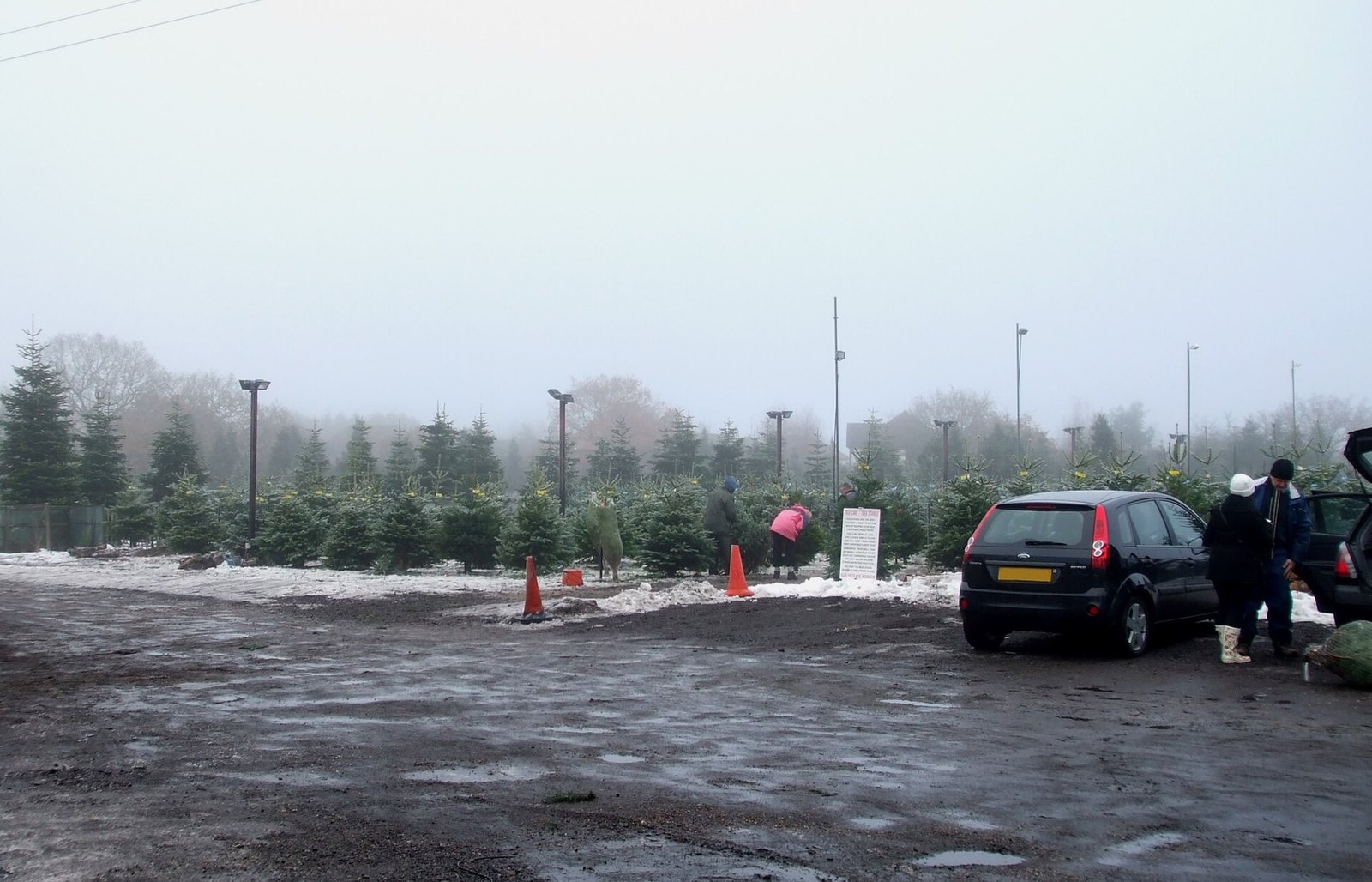
Buying tip that matters more than the date: check freshness at the lot. Run a branch through your fingers — needles should be pliable, fragrant, and mostly stay put. Lift the tree and drop it gently on its trunk; a shower of green needles means it's already drying out (a few brown interior needles are normal). A fresh tree feels heavy for its size, because it's full of water. That water is its lifespan.
Species Matters More Than People Realize
Not all Christmas trees age at the same speed. Fraser fir and noble fir are the long-distance runners — excellent needle retention, sturdy branches for heavy ornaments, and that classic scent. Nordmann fir lasts beautifully too and has soft needles kids and pets appreciate. Balsam fir smells like Christmas itself but dries a bit faster. Scotch pine holds its needles well and is budget friendly. Spruces, lovely as they look, are the sprinters — they tend to drop needles earliest, so buy them later and keep them impeccably watered.
If your tradition is an early tree and a real tree, a Fraser or Nordmann bought from a lot that keeps trees shaded and in water is your best combination. If you cut your own at a farm, you've bought yourself extra days, because your tree's clock starts that afternoon.
The First Hour Decides Everything
Here's the care routine, and it's mostly about the first day:
- Make a fresh cut. Saw about an inch off the bottom of the trunk when you get home. Within hours of being cut, a tree seals its trunk with sap, and that seal blocks water uptake. If the lot already made a fresh cut for you within the last few hours, you're fine — ask them.
- Get it in water fast. Ideally within the hour. If it has to wait, stand it in a bucket of water in the garage, not lying dry on the driveway.
- Use a stand that holds real water — at least a gallon. Those tiny stands that hold a cupful are why trees die early. A tree drinks roughly a quart a day in the first days, sometimes up to a gallon right at the start.
- Check the water daily, top it up daily. The level must never drop below the cut end of the trunk. If it does and the seal re-forms, uptake slows dramatically. Set a phone reminder for the first week — by week two, it's habit.
What About All the Additives?
Plain tap water wins. That's the consistent finding from tree-care research and the growers themselves: the soda, aspirin, sugar, vodka, and commercial formulas in home recipes don't outperform plain water, and some can encourage bacterial growth that clogs the trunk. Save the soda for the cookie exchange. What does help is position: keep the tree away from heating vents, fireplaces, radiators, and sunny windows. Heat is a real tree's fastest enemy. If the room runs hot and dry, lowering the thermostat a touch at night helps the tree and your sleep at once.
Lights help too, in a small way — modern LED lights run cool. Old incandescent strings add heat right against the needles. One more reason LEDs have quietly taken over.
Artificial Trees: Pick Your Own Start Date
With an artificial tree, the timing question becomes purely about joy and storage logistics. Mid-November has become the popular start — it stretches the coziest season and spreads the decorating work out. Take ten extra minutes to fluff properly and check light strands section by section before you decorate; finding a dead section after the ornaments are on is a special December heartbreak.
When to Take It Down
Tradition offers a few landmarks: New Year's Day for a fresh start, January 5th–6th for Twelfth Night and Epiphany (the traditional end of the Christmas season), or "when it stops making me happy," which for some of us is mid-January and that's fine too. For a real tree there's a hard limit: when it stops taking water and drops needles at a touch, it's a fire risk and it's done, however you feel about it. Most towns run tree recycling and mulching in early January — check your pickup dates before the tree is crispy on the curb.
So: put the tree up when your family wants it up. If it's real, buy fresh, cut the trunk, water it like it's a pet, and keep it away from the heat vent. Do those things, and the tree you decorated while a favorite Christmas movie played in the background will still be standing proud behind the New Year photos. That's the whole assignment — and it's very doable.
Shop This Article
As an Amazon Associate we earn from qualifying purchases — thank you for supporting the site.
Large-Capacity Christmas Tree Stand (1+ Gallon)
The single biggest factor in a long-lived tree. Tiny stands are why trees dry out early — go big on water capacity.
See it on AmazonPrice shown at checkout applies.
Automatic Tree Watering Funnel / Reservoir
Tops up the stand without you crawling under branches with a jug — and makes the daily check effortless.
See it on AmazonPrice shown at checkout applies.
LED Christmas Tree Lights, Warm White
Cool-running LEDs are gentler on real needles than old hot incandescents — prettier light, longer tree life.
See it on AmazonPrice shown at checkout applies.
Christmas Tree Storage Bag (for artificial trees)
For the artificial-tree household: proper storage is what makes mid-November setup painless year after year.
See it on AmazonPrice shown at checkout applies.